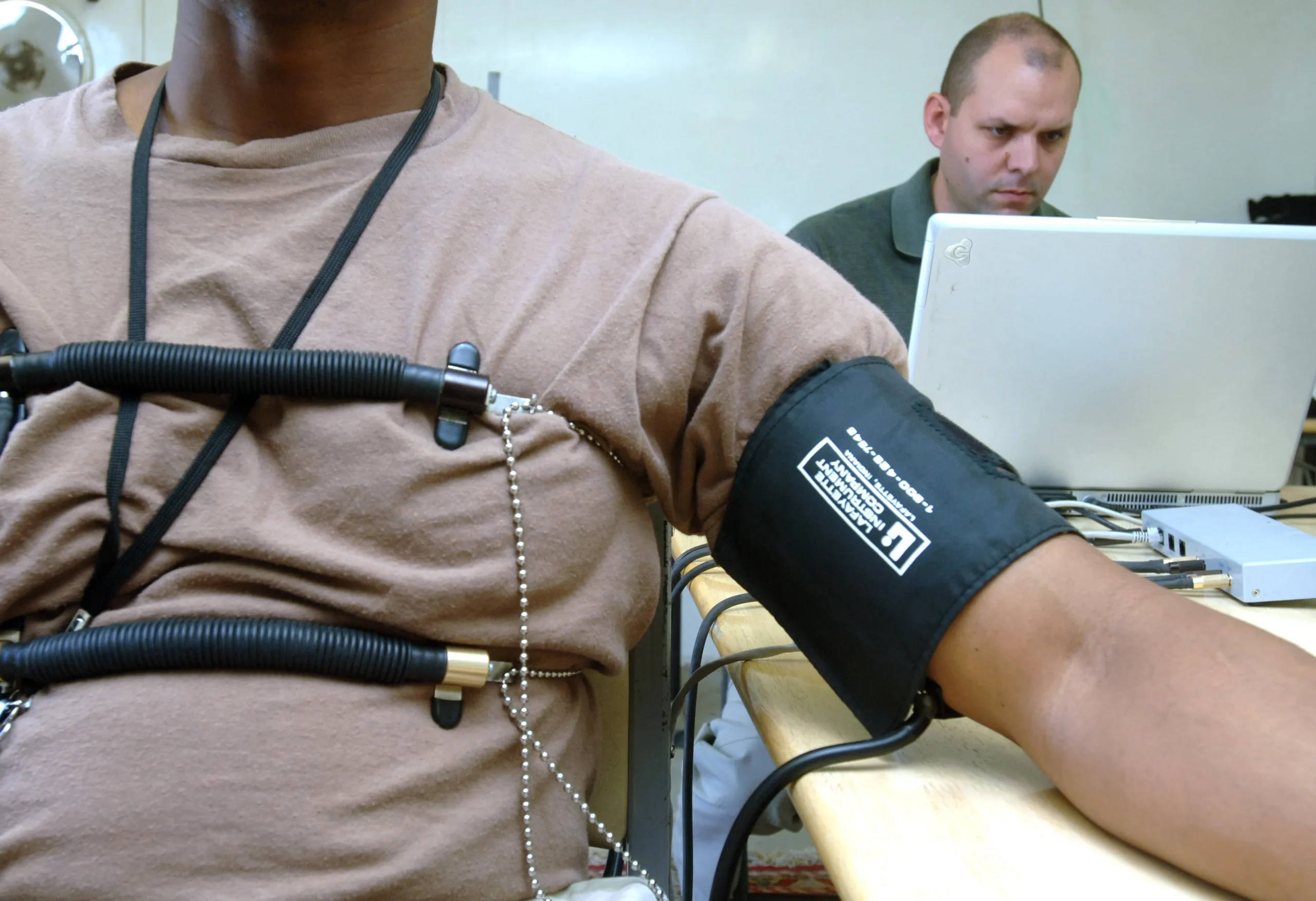
Most people think a polygraph test is a high-tech lie detector that can spot deception instantly. You’ve seen it in movies—someone sweating under pressure, wires attached, an
d a machine that somehow “knows” the truth.
Here’s the thing: it’s not that simple. Not even close.
A polygraph doesn’t actually detect lies. It measures physical reactions. And that difference matters more than most people realize.
Let’s unpack what’s really going on behind those wires and charts—and why the results aren’t as clear-cut as they’re often made out to be.
What a Polygraph Test Actually Measures
A polygraph tracks a few basic bodily responses: heart rate, breathing patterns, blood pressure, and skin conductivity (basically, how much you’re sweating).
That’s it.
The idea is straightforward. When someone lies, they might feel nervous or stressed. That stress triggers physical changes. The machine records those changes, and an examiner interprets them.
But here’s the catch—those same physical responses happen for all kinds of reasons.
Imagine this: you’re sitting in a quiet room, hooked up to sensors, being asked direct, uncomfortable questions. Even if you’re telling the truth, your body might react just because the situation feels intense. Your heart rate ticks up. Your breathing shifts. You sweat a little.
The machine doesn’t know why.
It just records the reaction.
The Human Factor: Why Interpretation Matters
People tend to assume the machine delivers a clear “truth” or “lie” result. It doesn’t. A human examiner interprets the data.
And humans, as you know, aren’t perfectly objective.
Examiners are trained, of course. They look for patterns—how your body responds to neutral questions versus relevant ones. But interpretation still involves judgment.
Two examiners could look at the same data and come to slightly different conclusions.
That’s one reason polygraph results are often debated, especially in legal settings. It’s not like a fingerprint match or DNA evidence. There’s a layer of subjectivity baked in.
The Control Question Trick
One of the most interesting parts of a polygraph test is something called “control questions.”
These are questions designed to make you a little uneasy, regardless of whether you’re guilty of anything related to the main issue.
For example, you might be asked something broad like, “Have you ever lied to someone who trusted you?”
Most people have. And even if you answer honestly, the question can still trigger a reaction.
Now compare that to a relevant question tied to the investigation. The examiner looks at how your body reacts to both types.
The theory is that a guilty person will react more strongly to relevant questions, while an innocent person might react more to the control ones.
Sounds clever, right?
But real people aren’t that predictable. Some innocent people react strongly to the relevant questions simply because they’re worried about being misunderstood. Some guilty people stay calm.
It’s messy.
Why Some People “Fail” Even When They’re Telling the Truth
This is where things get uncomfortable.
You can fail a polygraph test even if you’re completely honest.
Take someone applying for a job that requires a polygraph—say, a security position. They’re already nervous. They want to do well. They know the stakes are high.
Now they’re asked, “Have you ever done anything illegal?”
That’s a broad question. Maybe they once downloaded music illegally years ago. Maybe they’re overthinking it. Their body reacts.
The machine records the spike. The examiner notes it.
Suddenly, there’s doubt.
It doesn’t mean the person is lying about anything serious. It just means their body reacted in that moment.
Can People Beat a Polygraph?
Short answer: sometimes, yes.
Longer answer: it’s not easy, but it’s possible.
Because the test relies on physiological responses, some people try to manipulate those responses. This might involve controlled breathing, mental tricks, or even subtle physical actions like pressing their toes against the floor during certain questions.
The goal is to create artificial reactions during control questions, so the relevant ones don’t stand out as much.
Trained examiners look for this kind of behavior. But again, it’s not foolproof.
There’s also a simpler reality—some people just don’t react strongly under pressure. They stay calm naturally. That alone can make the test less reliable.
Where Polygraph Tests Are Actually Used
Despite all the controversy, polygraphs are still used in a few specific areas.
Law enforcement sometimes uses them during investigations. Not as definitive proof, but as a tool to guide questioning.
Certain government agencies use them during hiring or security clearance processes.
And occasionally, they show up in private situations—like resolving disputes or even relationship conflicts.
Yes, really.
There are cases where couples agree to a polygraph to settle questions of trust. Whether that’s a good idea is another discussion entirely.
Why Courts Often Don’t Trust Polygraphs
You might assume that something used by investigators would hold weight in court. Surprisingly, that’s often not the case.
Many courts either limit or completely reject polygraph results as evidence.
The main reason is reliability.
If a method can produce false positives (truthful people flagged as deceptive) and false negatives (deceptive people appearing truthful), it becomes risky to rely on it in serious legal decisions.
Judges tend to prefer evidence that’s more objective and consistent.
Polygraphs just don’t meet that standard.
The Psychological Pressure Is Real
Even if the science is debated, one thing is undeniable—the experience of taking a polygraph can be intense.
You’re in a controlled environment. The examiner watches closely. Every question feels loaded.
That pressure alone can influence how people respond, both physically and verbally.
There’s also a subtle psychological effect. If someone believes the machine can detect lies perfectly, they might be more likely to confess—even if the test itself isn’t that reliable.
In that sense, the polygraph can act less like a detector and more like a tool of persuasion.
A Quick Real-Life Style Scenario
Picture this.
A guy named Mark is called in for questioning about missing money at work. He insists he didn’t take it. He agrees to a polygraph, thinking it will clear his name.
During the test, he’s anxious. Not because he’s guilty—but because he’s worried no one will believe him.
When asked directly about the theft, his heart rate jumps. His breathing shifts.
The examiner flags it as a deceptive response.
Now Mark’s in a worse position than before, even though he told the truth the entire time.
This kind of situation isn’t just hypothetical. It’s one of the core criticisms of polygraph testing.
So… Are Polygraph Tests Useless?
Not exactly.
They can still be useful in certain contexts. They might help steer an investigation or encourage someone to talk more openly.
But treating them as a definitive lie detector? That’s where things go off track.
The results need to be taken with caution. They’re one piece of a much larger puzzle—not the final answer.
What to Keep in Mind If You Ever Take One
If you ever find yourself facing a polygraph test, it helps to understand what it can and can’t do.
First, know that your body reacting doesn’t automatically mean you’re being deceptive. It just means you’re human.
Second, don’t assume the outcome will be perfectly fair or accurate. There’s interpretation involved.
And finally, stay grounded. The test might feel intimidating, but it doesn’t have magical powers.
The Bottom Line
Polygraph tests sit in a strange space between science and psychology.
They measure real physical signals, but the leap from those signals to “truth” is far from certain.
That gap is where most of the controversy lives.
At the end of the day, a polygraph is less about detecting lies and more about interpreting stress. And stress, as anyone knows, doesn’t always tell a clear story.
If you keep that in mind, the whole idea of a “lie detector” starts to look a lot less definitive—and a lot more human.