Introduction
Open land in America does not stay open on its own. Pastures grow rank between grazing rotations, fence lines fill with saplings, and idle fields turn to brush within a season or two. Keeping acreage clear by hand is impossible, and a lawn mower simply cannot handle woody growth. A heavy-duty rotary cutter is the implement that keeps rural ground usable, mounting to a tractor to shred tall grass, weeds, and brush up to small saplings in a single pass, so a rancher or landowner can maintain pasture, trails, and field edges season after season.
How a Rotary Cutter Works
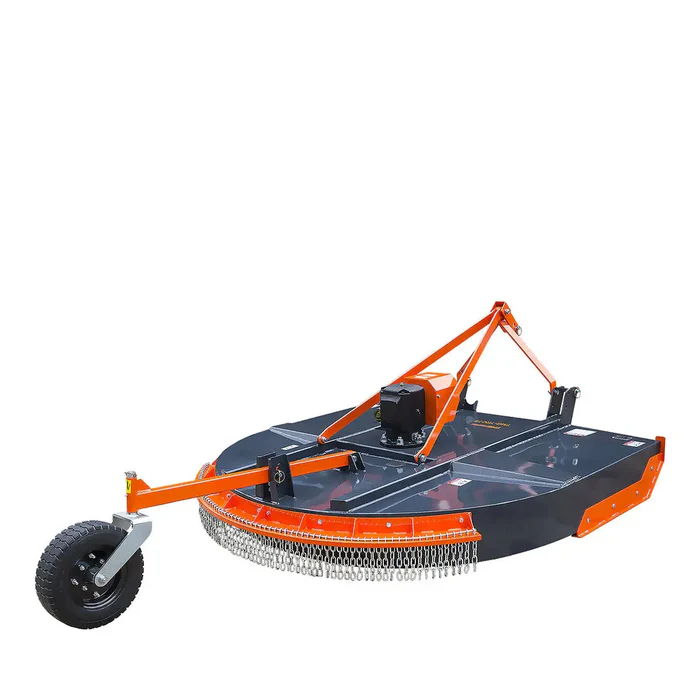
A rotary cutter, sometimes called a brush hog, is a heavy steel deck carrying one or more horizontal blades that swing on a central spindle. The tractor power take-off spins the blades at high speed, and unlike a fixed mower blade, the free-swinging design folds back on impact with rock or stump rather than bending. A three-point hitch lifts and lowers the deck, and a sixty-eight inch cut suits tractors from twenty-five to ninety horsepower across a wide range of properties.
Productivity and Land Health
Brush left uncut robs pasture of grazing value and harbors pests and weeds that spread across a property. A pasture rotary cutter reclaims that ground, mowing rank growth back to a healthy sward and cutting saplings before they become trees. On a cattle operation in the Texas Hill Country, regular cutting keeps mesquite and cedar in check and maintains the grass that feeds the herd, protecting both forage and land value over the long term. Routine cutting also reduces wildfire fuel and keeps fence lines, trails, and field edges accessible for cattle and equipment.
Build and Capacity
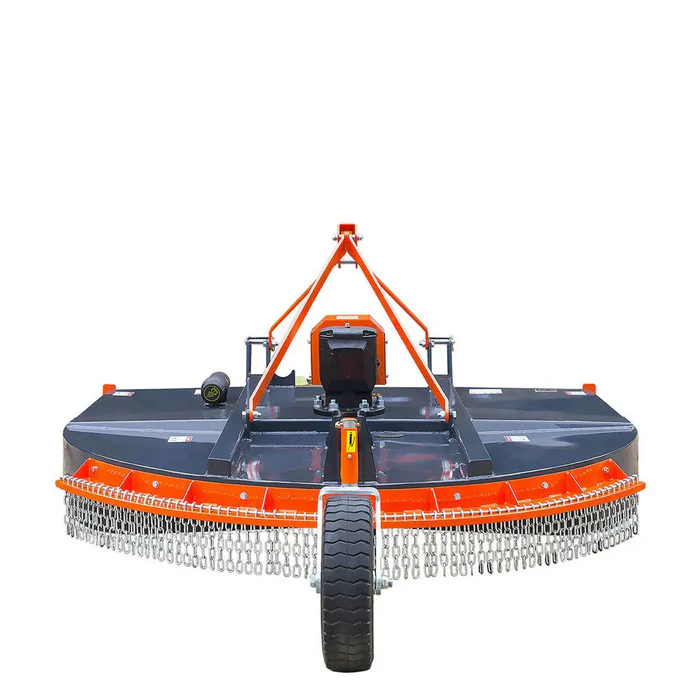
The durability of a three point rotary cutter rests on its deck steel, gearbox rating, and blade carrier. A thick welded deck resists the impacts of brush work, while a slip clutch or shear bolt protects the driveline when a blade strikes an immovable object. A reinforced blade pan carries the rotating mass, and a gearbox rated to the tractor horsepower sustains cutting through heavy growth without overheating on a long afternoon.
Performance Factors
Several conditions decide how a brush rotary cutter performs in the field:
· Tractor horsepower within the rated range
· Deck width matched to the tractor
· Blade sharpness for the material cut
· Driveline protection against impacts
· Ground speed set to the growth density
On rocky Ozark pasture, operators slow down and raise the deck slightly, since hidden stone is the surest way to damage blades and stress the gearbox.
Safe Operating Practices
Keep bystanders far clear of the deck, since a rotary cutter can throw debris a long distance. Confirm the power take-off guard and chain guards are in place, walk a field for hidden hazards before cutting, disengage the drive before lifting or clearing a jam, and lower the deck fully before leaving the tractor.
Types and Attachments
Light-duty cutters suit grass and light weeds, while heavy-duty models handle dense brush and saplings. Flex-wing cutters cover wide acreage efficiently, while single-deck units suit smaller tractors and tighter ground. Useful spares include replacement blades, shear bolts, and a slip clutch service kit for the driveline.
What Buyers Should Weigh
Choosing a rotary cutter is a question of matching deck and build to your land. Before buying, weigh these factors:
· Cutting width matched to your tractor
· Horsepower range for your machine
· Deck gauge and build for brush density
· Driveline protection type included
· Blade and gearbox quality for the work
· Warranty and parts support in the United States
Advantages and Limitations
Advantages:
· Clears brush a finish mower cannot touch
· Swinging blades survive rock and stump strikes
· Maintains pasture and land value over time
Limitations:
· Throws debris and demands clear distance
· Heavy deck needs adequate tractor lift
· Hidden rock can damage blades and gearbox
Industry Outlook
As more Americans buy rural acreage for small farms and recreation, demand for durable land-maintenance equipment continues to grow among first-time owners. Manufacturers are strengthening decks, improving driveline protection, and tuning gearboxes to wider horsepower ranges. The broad selection of rotary cutters and farm implements reflects that change, and the rotary cutter remains the one implement nearly every rural property eventually needs to keep its land open and productive.