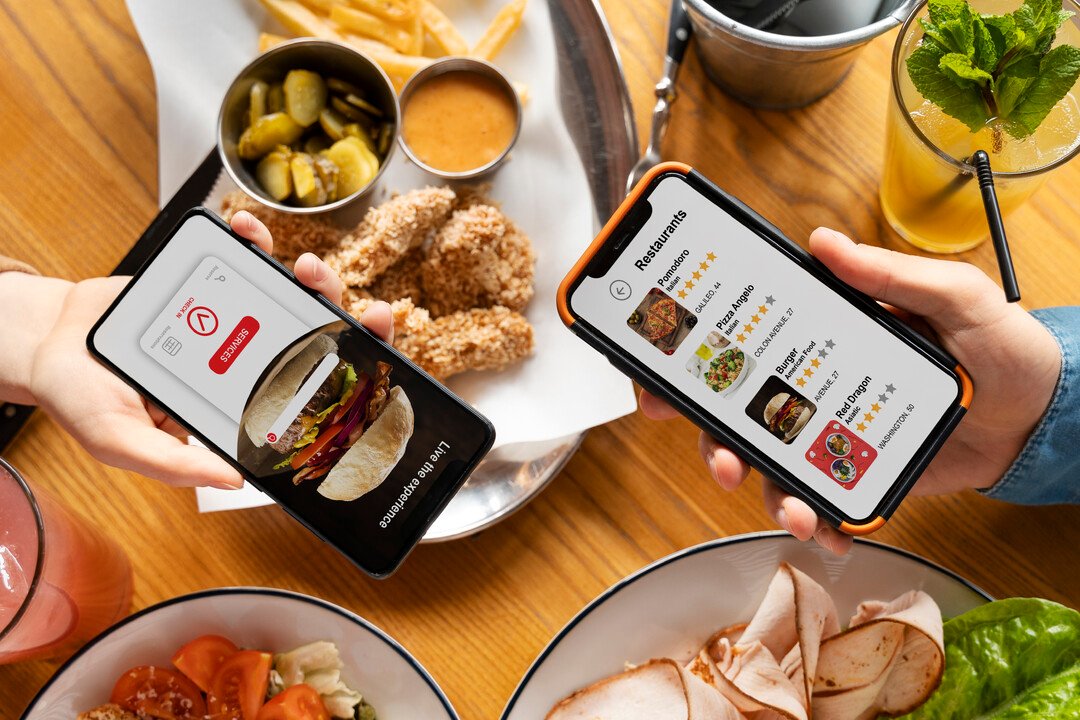
Delivery has become a major part of the restaurant business, but many restaurants are realizing that delivery experience is not only about getting food from the kitchen to the customer. It is also about brand control, customer communication, ordering convenience, data ownership, loyalty, and profitability. That is why more Canadian restaurants are exploring a white label food delivery app as a way to create branded delivery experiences instead of relying only on third-party marketplaces.
iOrders explains that its white-label solution gives restaurants full customization, zero commissions, and tools that support loyalty while giving operators greater control over online ordering. For restaurants, this matters because delivery is now part of brand perception. A customer’s experience with the app, menu, payment, tracking, delivery updates, and follow-up offers affects how they remember the restaurant.
What Is a Branded Delivery Experience?
A branded delivery experience is an ordering and delivery journey controlled by the restaurant’s own brand. The customer orders through the restaurant’s website or app, sees the restaurant’s design and messaging, receives direct updates, earns loyalty rewards, and interacts with the restaurant rather than a third-party marketplace.
This includes:
- Branded mobile app
- Restaurant-owned ordering website
- Custom menu layout
- Direct payment experience
- Loyalty rewards
- Push notifications
- Personalized offers
- Real-time order tracking
- Branded delivery updates
- Customer data ownership
The goal is to make the delivery experience feel like an extension of the restaurant, not a generic marketplace transaction.
Why Third-Party Delivery Is Not Enough
Third-party delivery platforms can help restaurants reach new customers, but they also create challenges. Restaurants often compete beside similar businesses, rely on platform visibility, pay commissions, and lose direct access to customer data.
iOrders’ white-label delivery page notes that third-party apps may charge 15% to 30% per order and often limit branding, data ownership, and direct customer interaction compared with a commission-free branded platform.
For a restaurant, this can affect long-term growth. If customers order through a third-party app, they may remember the platform more than the restaurant. They may compare mainly by price, discount, rating, or delivery estimate.
A branded delivery experience helps shift the relationship back to the restaurant.
Customers Still Want Digital Convenience
Restaurants are not moving away from delivery. They are trying to make delivery more sustainable and brand-owned.
Canadian customers are already comfortable ordering food online. Deliverect’s Canada delivery report states that 54% of Canadian consumers prefer ordering food delivery through third-party apps or websites. This means restaurants cannot ignore digital ordering. Customers expect it.
The issue is how restaurants deliver that convenience. A branded app gives customers a direct option that still feels easy, mobile-friendly, and modern.
Branded Apps Help Restaurants Own the Customer Journey
A customer’s delivery journey includes several steps:
- Searching for food
- Viewing the menu
- Selecting items
- Applying offers
- Paying
- Receiving order confirmation
- Tracking preparation
- Receiving delivery updates
- Eating the meal
- Leaving feedback
- Ordering again
If most of this journey happens through a third-party marketplace, the platform owns much of the experience. With a branded app, the restaurant can design the journey around its own service style.
iOrders describes its white-label app as customizable across brand identity, color schemes, logos, menu layouts, user interfaces, and operational needs.
That level of control helps restaurants present themselves more professionally and consistently.
Brand Loyalty Needs a Direct Channel
Loyalty is harder to build when customers do not order directly. If customers interact mainly with a marketplace, the restaurant has fewer chances to encourage repeat visits.
A branded app gives restaurants a place to build loyalty through:
- Points
- Digital rewards
- Exclusive app-only offers
- Birthday promotions
- Reorder reminders
- Personalized deals
- Push notifications
- VIP customer segments
iOrders’ white-label app includes loyalty program modules, push notifications, dashboards, real-time order tracking, and multiple payment options.
This makes repeat engagement easier. Customers can associate rewards directly with the restaurant instead of the marketplace.
Customer Data Helps Restaurants Make Smarter Decisions
A branded delivery experience gives restaurants access to customer behavior. This data can help operators understand what customers order, when they order, how often they return, and which promotions work.
iOrders states that restaurants using its white-label app get ownership and control over collected customer data, including order histories, preferences, contact details, lifetime value, and ordering patterns.
This data supports better decisions around:
- Menu pricing
- Promotions
- Meal bundles
- Delivery zones
- Loyalty campaigns
- Popular items
- Slow periods
- Customer retention
- Marketing spend
Without direct data, restaurants may know that orders came in, but not enough about who ordered and how to bring them back.
Delivery Experience Affects Customer Perception
Customers often judge delivery by more than food quality. They also notice:
- Was ordering easy?
- Was the menu clear?
- Did payment work smoothly?
- Was the delivery estimate accurate?
- Did the restaurant communicate delays?
- Did the food arrive correctly?
- Was the packaging professional?
- Was reordering simple?
A branded app gives restaurants more control over these moments. Instead of depending entirely on a third-party interface, restaurants can create a digital experience that matches their service standards.
This is especially important for restaurants that already invest in ambience, packaging, hospitality, and menu storytelling. The digital experience should reflect the same brand quality.
Branded Delivery Can Support Better Margins
Commission fees can reduce delivery profitability. When restaurants pay a significant percentage of every order to third-party platforms, they may need to raise prices, reduce margins, or rely heavily on volume.
A branded app can create a more sustainable direct ordering channel. iOrders positions its model around commission-free ordering with no hidden charges and a fixed-cost structure.
This does not mean restaurants must remove all third-party listings. Many operators use marketplaces for discovery and direct channels for repeat customers. The branded app becomes the preferred channel for customers who already know and like the restaurant.
White Label Apps Make Branded Delivery More Accessible
Many restaurants would like their own app, but custom development can be expensive and slow. iOrders notes that its white-label app can be deployed in 2 to 4 weeks, while custom app creation can take 6 to 12 months and require large upfront investment.
This makes branded delivery more accessible for independent restaurants and small chains. Instead of building technology from scratch, restaurants can use a ready platform customized for their brand.
Branded Delivery Supports Local Restaurant Independence
Independent restaurants often compete with large chains that already have mobile apps, loyalty programs, and marketing teams. A white-label delivery app helps level that gap.
With a branded app, smaller restaurants can offer:
- Direct ordering
- Loyalty rewards
- Push notifications
- Customer data tracking
- App-based promotions
- Mobile convenience
- Delivery management
- Professional brand presentation
This allows local restaurants to compete digitally without losing their identity inside a third-party marketplace.
How Restaurants Can Encourage Customers to Order Directly
A branded app works best when restaurants actively promote it.
They can encourage direct ordering by:
- Adding QR codes to packaging
- Training staff to mention direct ordering
- Offering app-only rewards
- Including download links in receipts
- Promoting the app on social media
- Sending email campaigns to existing customers
- Offering first-order direct discounts
- Highlighting loyalty benefits
- Adding website banners
- Using table cards for dine-in customers
The goal is to make direct ordering visible and worthwhile.
Conclusion
Restaurants are moving toward branded delivery experiences because delivery is now part of the customer relationship. Third-party platforms can provide visibility, but they often limit brand control, data ownership, direct communication, and margin.
A branded delivery app gives restaurants more control over how customers order, pay, track, receive offers, earn rewards, and return. For Canadian restaurants facing growing digital demand, this direct channel can support stronger loyalty and more sustainable delivery operations.
iOrders helps restaurants build branded delivery experiences through white-label apps, commission-free ordering, customer data ownership, loyalty tools, delivery management, and mobile ordering features. For restaurants that want delivery to strengthen their brand rather than dilute it, branded ordering is becoming a smarter path forward.